Dumpster Defense
DUMPSTER FLY CONTROL FOR SAN ANTONIO BUSINESSES
Waste zones are where a lot of commercial fly pressure begins. Dumpster Defense gives dumpsters, enclosures, grease areas, and exterior refuse zones the attention they need.
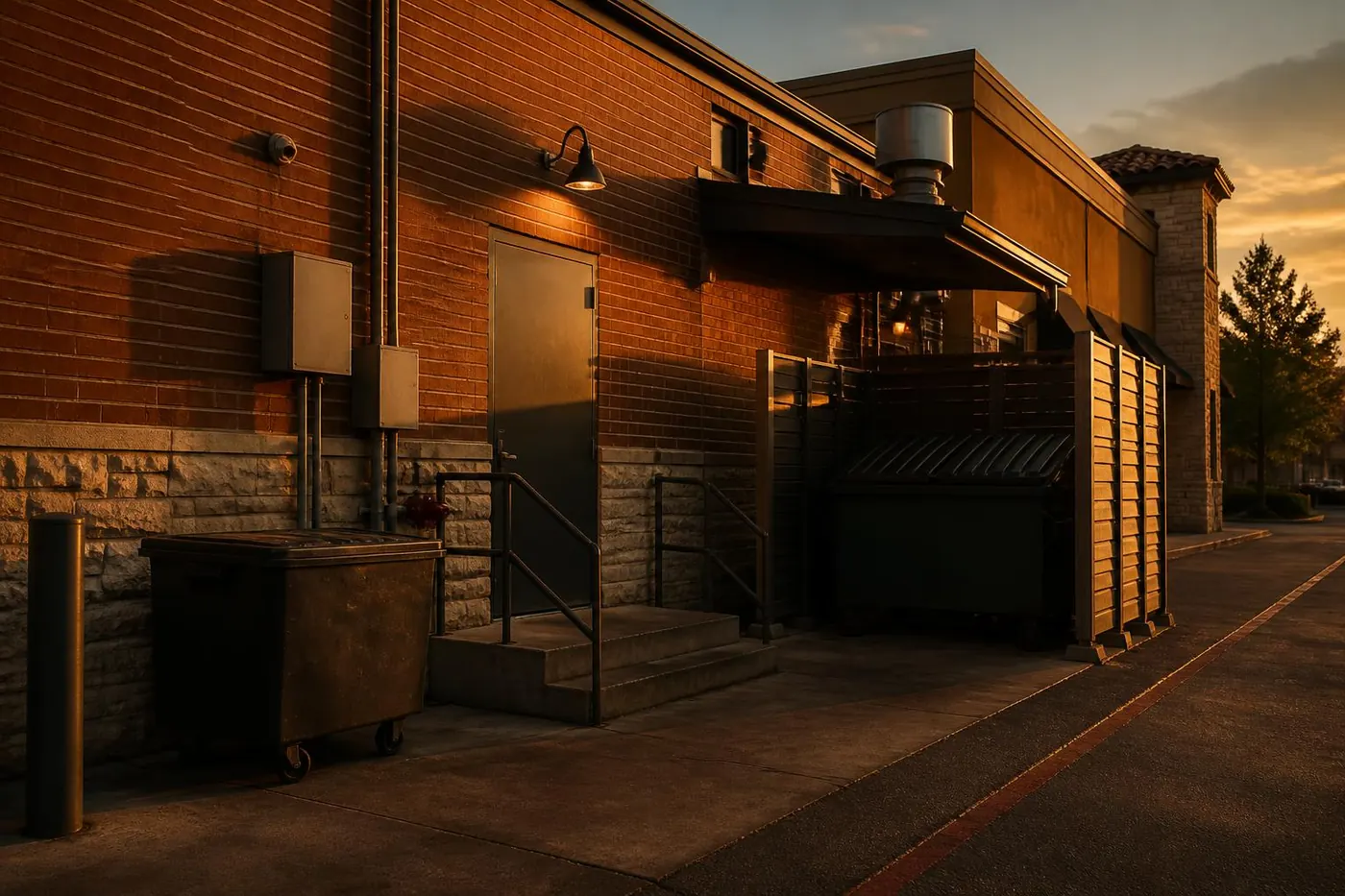
Out back
WHAT WE LOOK AT.
Every commercial property handles waste differently, and no two enclosures are the same. Rather than assume a property has a particular issue, we evaluate what is actually present and how it is being managed.
Common contributors we assess include organic residue inside and around containers, grease containment and spillage, pavement conditions and drainage, container lids and enclosure structure, pickup frequency relative to volume, and the distance and path between the waste zone and customer-facing areas.
From there we recommend a service approach and, where relevant, practical operational adjustments your team can make between visits.
- Dumpsters and waste containers
- Waste enclosures and surrounding pavement
- Grease containment areas
- Organic material and residue
- Moisture and drainage conditions
- Back-door traffic and travel paths
Questions
COMMON QUESTIONS.
Does The Fly Guy treat outdoor areas?
Yes. Our strategy is exterior-first. Much of the fly pressure reaching a commercial interior originates outside, so outdoor areas are part of how we evaluate and service a property.
Can you treat dumpster areas?
Dumpster and waste enclosure zones are a specific focus of our Dumpster Defense service. We evaluate the conditions around refuse and grease areas and address them as part of the overall service plan.
How often should a commercial property receive fly-control service?
It depends on the property, the season, the surrounding conditions, and the level of pressure observed. We recommend a service frequency after the assessment rather than before it.
Why do flies keep returning around commercial properties?
Flies are usually responding to conditions — organic material, moisture, waste, heat, and access points. If the conditions producing them are not addressed, activity tends to return.
Related pages